wafer.space Community
🏗️ - Designing / project-template
Between 2025-11-30 11:59 p.m. and 2026-01-01 12:00 a.m.

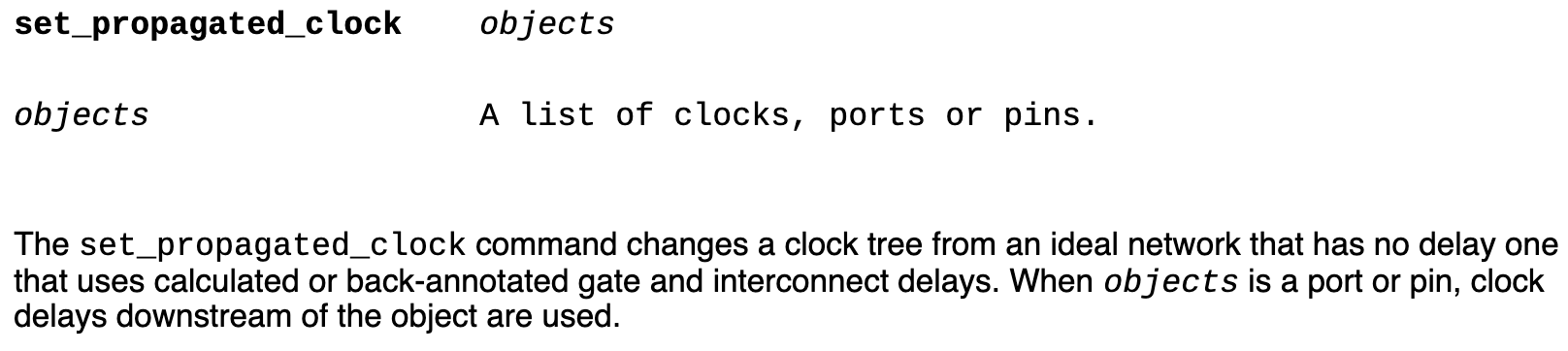
.sdc in the template has this at the end:
if { [info exists ::env(OPENLANE_SDC_IDEAL_CLOCKS)] && $::env(OPENLANE_SDC_IDEAL_CLOCKS) } {
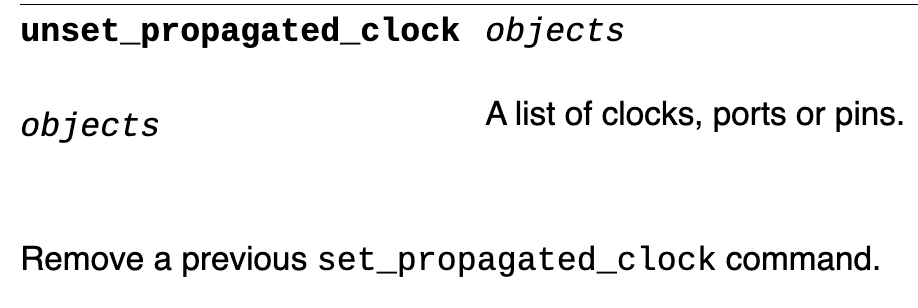
    unset_propagated_clock [all_clocks]
} else {
    set_propagated_clock [all_clocks]
}
However I've instrumented this and that variable is never set in any stages, which is probably why I have multi-hundred-ns clock slew times in pre-CTS STA. @Leo Moser (mole99) do you know what's up with that? librelane sets it here: https://github.com/librelane/librelane/blob/774d6e6f221ccf21bd499e9b8ccba4afeffff4fd/librelane/steps/openroad.py#L725-L728set clk_pins [get_pins -of_objects [get_net -of_objects [get_pins i_chip_core.clkroot_sys_u.magic_clkroot_anchor_u/Z]]]
set clk_loads [llength $clk_pins]
puts "clk_sys has $clk_loads directly connected pins"
if { [expr $clk_loads > 10] } {
puts "Setting all clocks to ideal!"
unset_propagated_clock [all_clocks]
} else {
puts "Setting all clocks to non-ideal"
set_propagated_clock [all_clocks]
}
This prints the right messages in the right phases (ideal until after CTS), but even with unset_propagated_clock [all_clocks] my early STAs still have enormous clock rise/fall times. Is this just a me problem or do other people's pre-CTS STAs also have huge setup violations due to clock slew? (edited)
 right now there isn't really any usable timing information in the early STA which I imagine is part of the reason the early resizer step has been turned off
 0.150000 0.000000 0.000000 clock clk_PAD (rise edge)
0.000000 0.000000 clock network delay (ideal)
0.150000 0.000000 0.000000 ^ i_chip_core.tt.i_peripherals.i_simple_peri16.i_spi_ctrl.rstn_gf180mcu_fd_sc_mcu7t5v0__dffq_1_Q/CLK (gf180mcu_fd_sc_mcu7t5v0__dffq_1)
832 4.638381 110.209221 63.362564 63.362564 ^ i_chip_core.tt.i_peripherals.i_simple_peri16.i_spi_ctrl.rstn_gf180mcu_fd_sc_mcu7t5v0__dffq_1_Q/Q (gf180mcu_fd_sc_mcu7t5v0__dffq_1)
i_chip_core.tt.i_peripherals.i_simple_peri16.i_spi_ctrl.rstn (net)
110.209221 0.000000 63.362564 ^ i_chip_core.tt.i_peripherals.i_simple_peri19.ay8913.noise_generator.reset_gf180mcu_fd_sc_mcu7t5v0__clkinv_1_ZN/I (gf180mcu_fd_sc_mcu7t5v0__clkinv_1)
164 0.691456 3.280350 53.123268 116.485832 v i_chip_core.tt.i_peripherals.i_simple_peri19.ay8913.noise_generator.reset_gf180mcu_fd_sc_mcu7t5v0__clkinv_1_ZN/ZN (gf180mcu_fd_sc_mcu7t5v0__clkinv_1)
i_chip_core.tt.i_peripherals.i_simple_peri19.ay8913.noise_generator.reset (net) 1
1set_ideal_network which you can use to do the same thing for resets but I don't think OpenSTA supports itset main_clk_pin [get_pins i_chip_core.clkroot_sys_u.magic_clkroot_anchor_u/Z]
set rst_pins [get_pins i_chip_core.*sync*flop2/Q]
set clk_pins [get_pins -of_objects [get_net -of_objects ${main_clk_pin}]]
set clk_loads [llength ${clk_pins}]
puts "clk_sys has ${clk_loads} directly connected pins"
if { [expr $clk_loads > 10] } {
puts "Setting all clocks to ideal!"
unset_propagated_clock [all_clocks]
puts "Case analysing reset nets:"
foreach pin ${rst_pins} {puts [sta::get_full_name ${pin}]}
set_case_analysis 1 ${rst_pins}
} else {
puts "Setting all clocks to non-ideal"
set_propagated_clock [all_clocks]
unset_case_analysis ${rst_pins}
}
Seems to work for me. Might give better placement as the datapath delays are actually realistic. (edited) 2

AREA 3 seems to be working best/fastest for my design so farlibrelane-explore: ## Run synthesis exploration
librelane librelane/config.yaml --pdk ${PDK} --pdk-root ${PDK_ROOT} --manual-pdk --last-run --flow SynthesisExploration
.PHONY: librelane-explore
And then run make librelane-explore it will try all 9 strategies and tell you which is best (though it's just synthesis timing) 2
2 2
2 got it down to about 3ns but just can't seem to improve from there. might need to just drop the clock at this point 1
RUN_POST_GRT_RESIZER_TIMING: True 1
1 looked fine in the normal corners, just the hot ones were bad
librelane with a --last-run --from (some pass) argument to make it restart a run from part way. Since I'm pressed for time I'd probably just edit the netlist with a text editor and re-run from there 1
1max.rpt from the final STA I'm using a transpiled HDL which makes everything even more inscrutable too
RUN_POST_GRT_RESIZER_TIMING: True 



yaml before config.yaml broke 9t cell support! (edited)
resloved.json in the runs folder gets confused
STD_CELL_LIBRARY: gf180mcu_fd_sc_mcu9t5v0 in slot_*.yaml file instead of config.yamlyaml file passed into the librelane  ♂️
♂️
yaml before config.yaml broke 9t cell support! (edited)STD_CELL_LIBRARY to slot_*.yaml instead is a workaround.
I'm suspect that only STD_CELL_LIBRARY is affected because it is a special variable that can be set by passing --scl to LibreLane. If you see other variables being overwritten, please let me know. However, I think that's unlikely.STD_CELL_LIBRARY to slot_*.yaml instead is a workaround.
I'm suspect that only STD_CELL_LIBRARY is affected because it is a special variable that can be set by passing --scl to LibreLane. If you see other variables being overwritten, please let me know. However, I think that's unlikely. 1 1 1
1 1SYNTH_AUTONAME: True, however that results in very long names so you'll likely have to go up to Magic 8.3.578 or later to avoid LVS errorsRUN_POST_GRT_RESIZER_TIMING: True 3 1
1config.json from the CTS pass:
"CTS_CLK_MAX_WIRE_LENGTH": 0,
Would limiting the max wire length help with the pre/post extraction differences?DESIGN_REPAIR_MAX_WIRE_LENGTH in the config, not sure if that ends up being the same as the CTS setting 1 3 it works!
 4
4 2
2 3
3config.json from the CTS pass:
"CTS_CLK_MAX_WIRE_LENGTH": 0,
Would limiting the max wire length help with the pre/post extraction differences? CTS_CLK_MAX_WIRE_LENGTH only constraints the wire from the clock input pin to the clock root buffer. So it would only shift the whole clock tree, as I understand it. 1 1
1CTS_CLK_MAX_WIRE_LENGTH only constraints the wire from the clock input pin to the clock root buffer. So it would only shift the whole clock tree, as I understand it.  1
1CTS_DISTANCE_BETWEEN_BUFFERS seems to do nothing at all 1CTS_TOLERANCE from OpenLANE was removed  1
1 1
1 1 1 1 1
Chip' - Stage 68 - Design Rule Check (KLayout) ━━━━━━━━━━━━━━━━━━━━━━━━━━━━━━━━━━╸━━━━━ 67/77 7:51:20
I am having a time of it 1
 1
1 2 1
2 1
Chip' - Stage 68 - Design Rule Check (KLayout) ━━━━━━━━━━━━━━━━━━━━━━━━━━━━━━━━━━╸━━━━━ 67/77 7:51:20
I am having a time of it Chip' - Stage 68 - Design Rule Check (KLayout) ━━━━━━━━━━━━━━━━━━━━━━━━━━━━━━━━━━╸━━━━━ 67/77 11:45:25
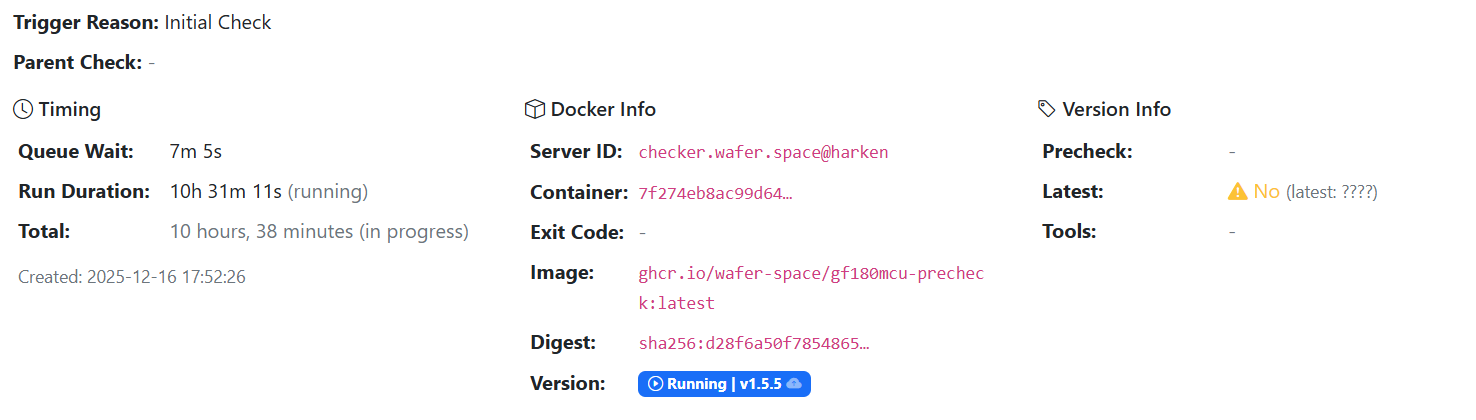
um. what do I do when klayout gets stuck on my design.
Chip' - Stage 68 - Design Rule Check (KLayout) ━━━━━━━━━━━━━━━━━━━━━━━━━━━━━━━━━━╸━━━━━ 67/77 11:45:25
um. what do I do when klayout gets stuck on my design.  time to learn how to debug...hopefully it's just the logo art I added
Poly overlap of contact < 0.065um (CO.3) in 9-track std cellsPoly overlap of contact < 0.065um (CO.3) in 9-track std cells gf180mcuD pdk,
co3_l.output('CO.3', 'CO.3 : Poly2 overlap of contact. : 0.07µm')
Does wafer.space have it's own version of the pdk? (edited)clone-pdk: ## Clone the GF180MCU PDK repository
rm -rf $(MAKEFILE_DIR)/gf180mcu
git clone https://github.com/wafer-space/gf180mcu.git $(MAKEFILE_DIR)/gf180mcu --depth 1
.PHONY: clone-pdk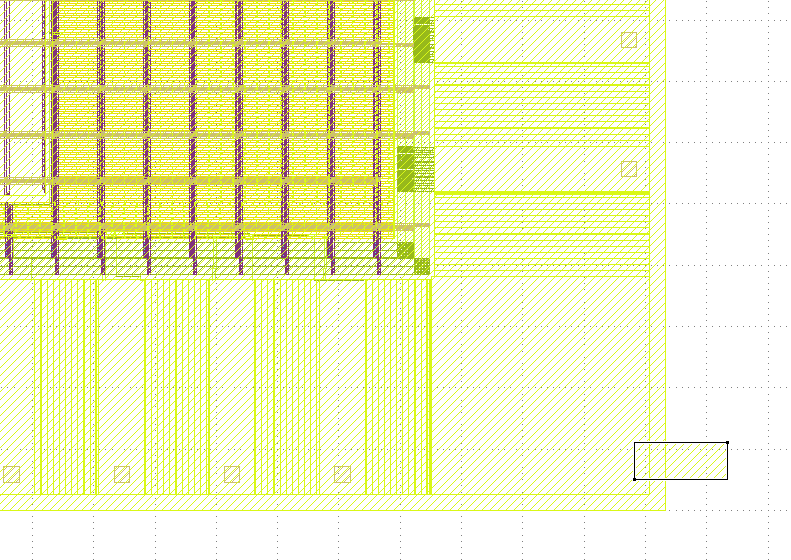
.lyrdb 1checker-klayoutdrc)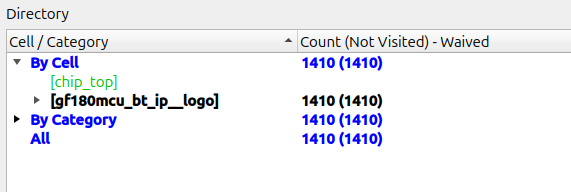 1
1librelane Makefile target and add --last-run --from KLayout.DRC or some such. I never got the re-runs to work though
But you also need to pass the initial state.--with-initial-state should point to the input state of e.g. Klayout DRC. probably easiest to just redo the whole thing, the DRC is the timesuck anyway and that cant be avoided (edited)select top cell
property FIXED_BBOX [box values]
lef write <lef_file> -hide
Before that, you could load the lef in klayout to see if the coordinates match the gds. If they don't, then you might try the above solution. (edited) )

 1
1DF.6_MV : Min. COMP extend beyond gate (it also means source/drain overhang). : 0.4µm.
COMP on top belongs to a sdffrnq_4 and poly below belongs to a nand3_4 (edited)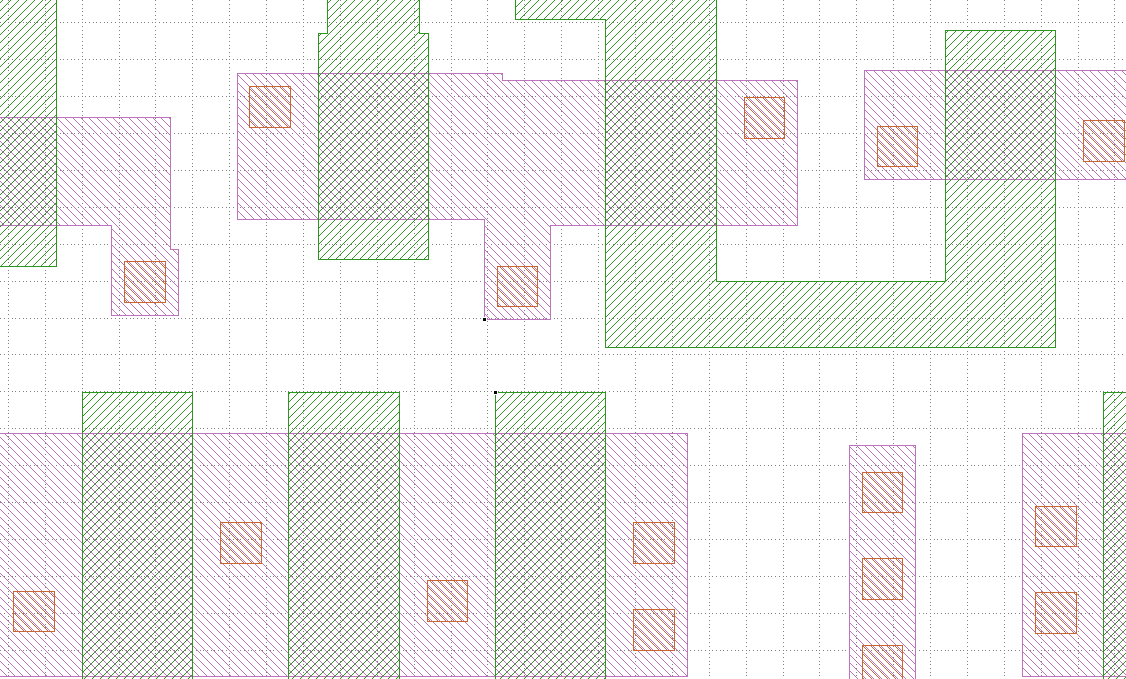
 1
1DF.6_MV : Min. COMP extend beyond gate (it also means source/drain overhang). : 0.4µm.
COMP on top belongs to a sdffrnq_4 and poly below belongs to a nand3_4 (edited)
sdffrnq_4 in the future https://github.com/Wren6991/RISCBoy-180/blob/main/librelane/gf180_scanflop_map.v 2 1sdffrnq_4 in the future https://github.com/Wren6991/RISCBoy-180/blob/main/librelane/gf180_scanflop_map.v  1
1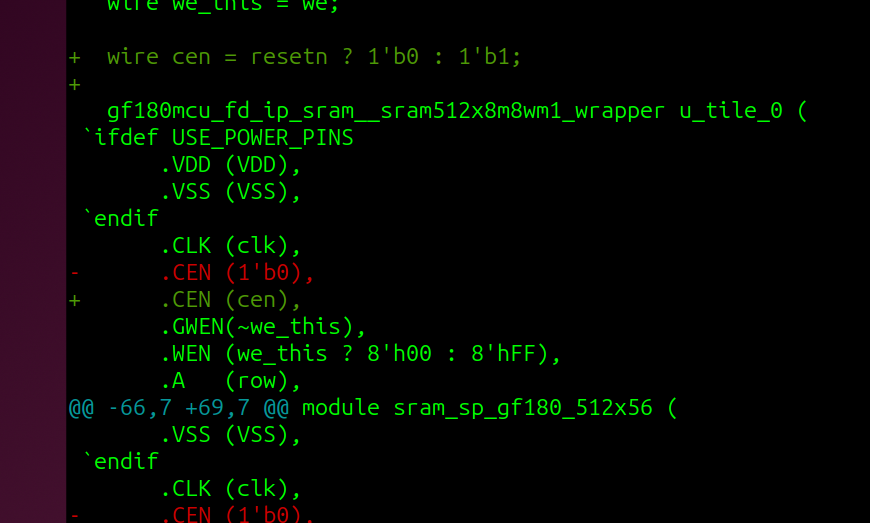 1
1
reg [WIDTH-1:0] mem [0:DEPTH-1];

reg [WIDTH-1:0] rdata_q;
assign rdata = rdata_q;
always @ (posedge clk) begin: update
    integer i;
    if (!cs_n && we_n) begin
        rdata_q <= mem[addr];
    end
    if (!cs_n && !we_n) begin
        for (i = 0; i < WIDTH / 8; i = i + 1) begin
            if (!be_n[i]) begin
                mem[addr][i * 8 +: 8] <= wdata[i * 8 +: 8];
            end
        end
    end
end as a complete outsider to the industry, i'm kinda horrified what passes as normal (from the little bit I've peeked behind the curtain) * Project: 018 5VGREEN SRAM
* Author: GlobalFoundries PDK Authors
* Data Created: 05-06-2014
* Revision: 0.0 1!CEN && GWEN is a read enable which is aligned with the address. If that function is true on cycle n then new read data is valid on Q on cycle n + 1 (edited)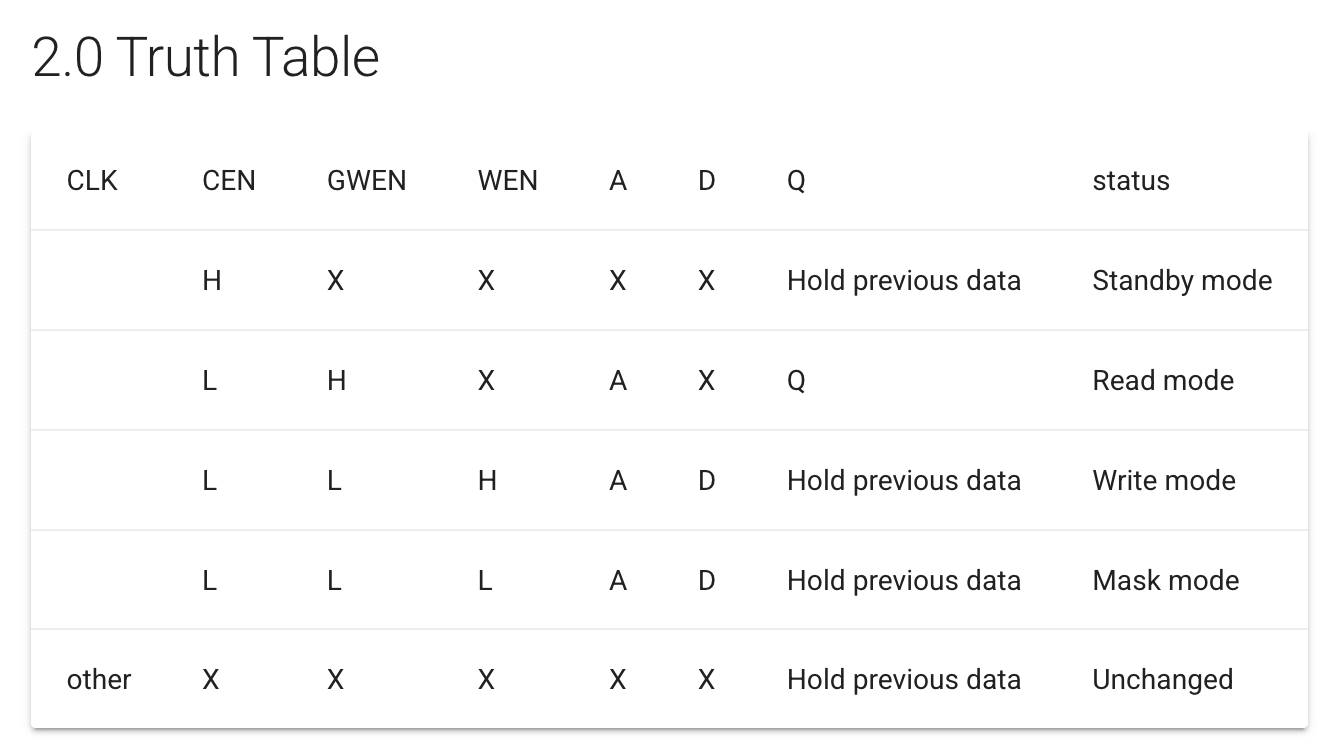
div or rem?librelane-yolo: ## Run full flow, including DRC, but don't quit after DRC errors
librelane librelane/config.yaml --pdk ${PDK} --pdk-root ${PDK_ROOT} --manual-pdk --skip Checker.MagicDRC --skip Checker.KLayoutDRC
.PHONY: librelane-yolo 1 1
1QUIT_ON_MAGIC_DRC: False
QUIT_ON_KLAYOUT_DRC: False--noextract option which will use the existing extracted data in the WORK_ROOT directory. (edited)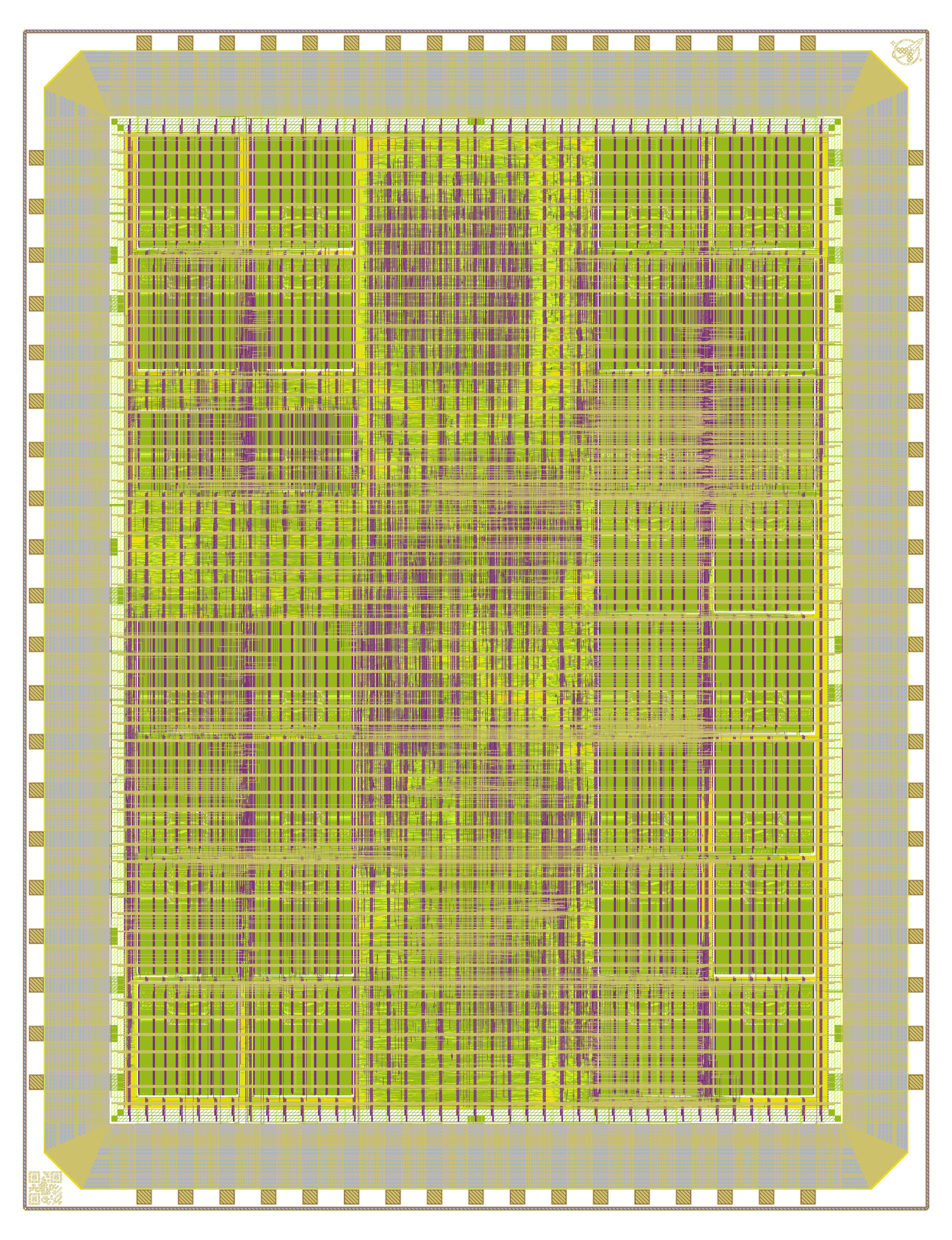
 1 1 5
1 1 5/*******************************************************************************
* SRAM_CHICKEN *
*******************************************************************************/
// The foundry SRAM models return incorrect data if chip select transitions on a
// clock edge. 99% sure this is just an issue with the model, but just in case,
// this register forces all SRAMs to be permanently enabled. You should clear
// this bit to avoid wasting power.
// Field: SRAM_CHICKEN Access: RW
// Reset: 0x1
#define SYSCFG_SRAM_CHICKEN_LSB 0
#define SYSCFG_SRAM_CHICKEN_BITS 1
#define SYSCFG_SRAM_CHICKEN_MASK 0x1
I can simulate with the unmodified foundry models now. When I get chips back I'll find out whether that was necessary. 1 1 I'm going to keep testing up until the last minute 1
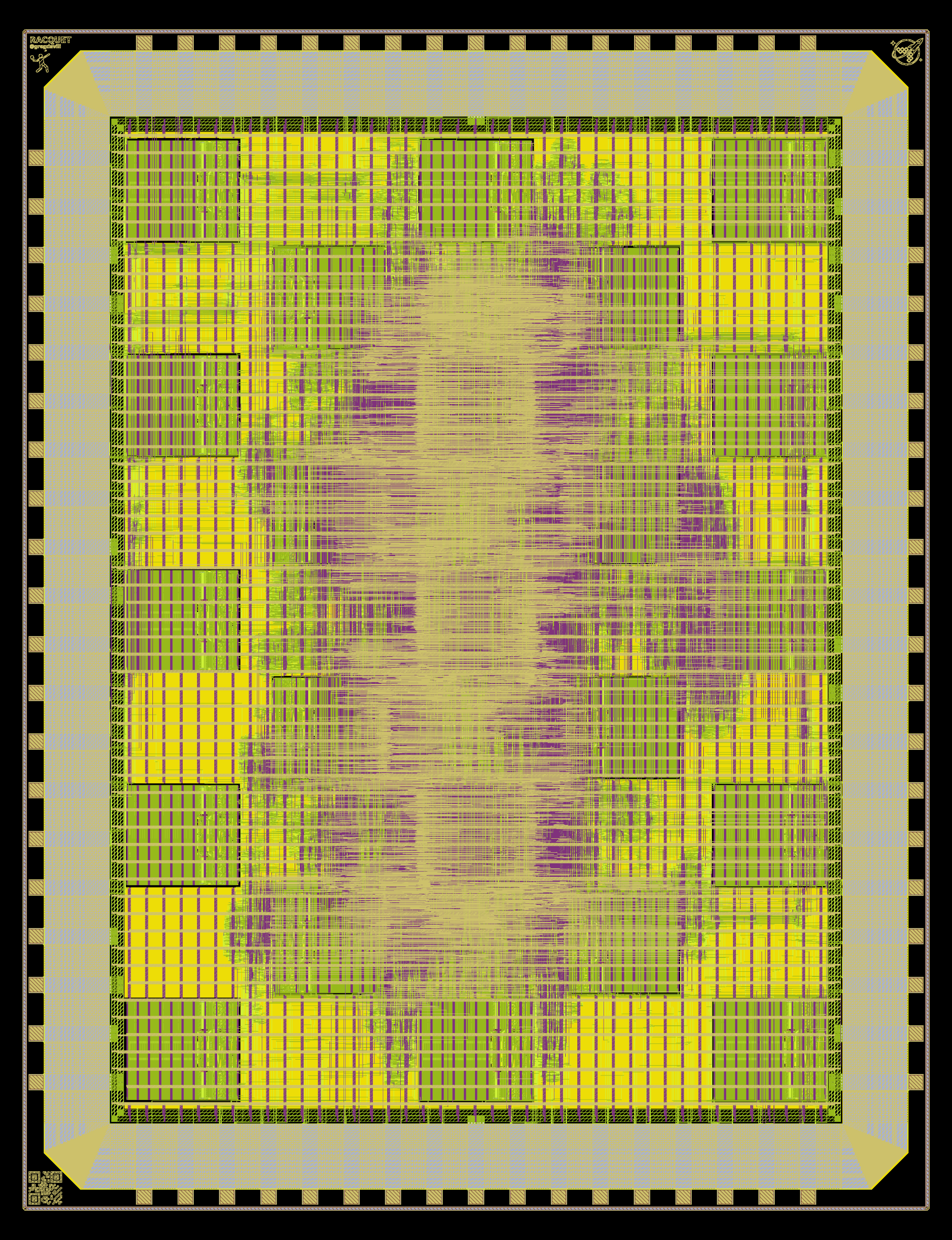 4
4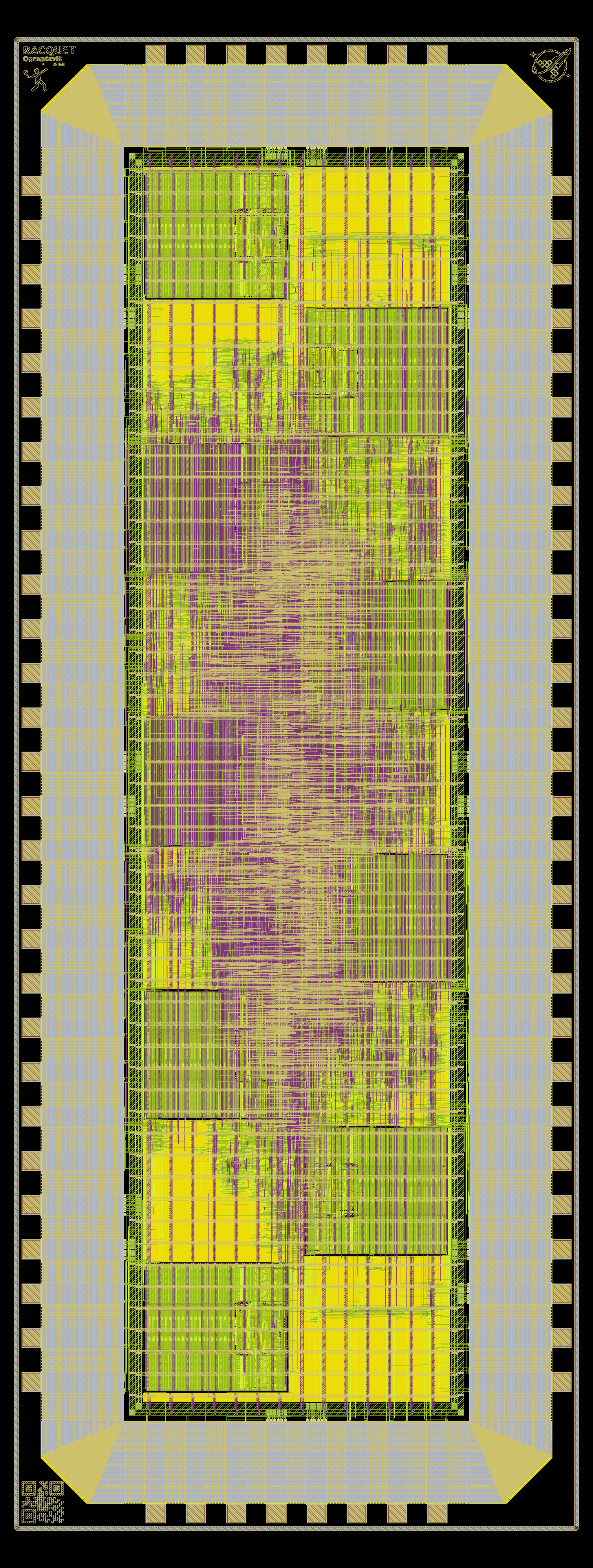 1
1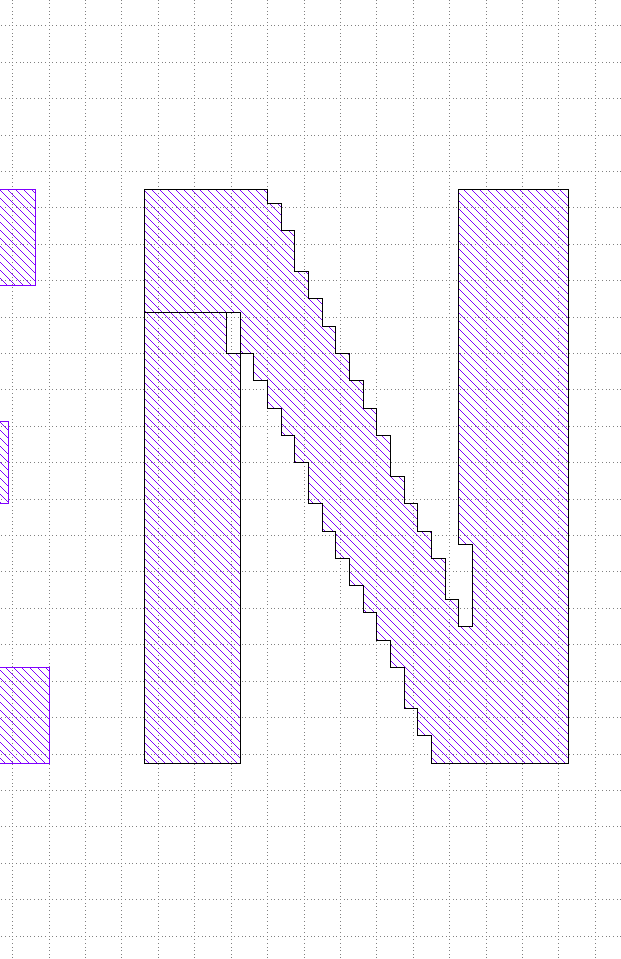
klayout -e is the magic flag required to actually let you edit anything) 1 1 thanks Greg 1 1
1 (edited)
STD_CELL_LIBRARY: gf180mcu_fd_sc_mcu9t5v0 in the project template and it's not applied (still the 7 track cell). Is this overriden somewhere I'm missing?export STD_CELL_LIBRARY=gf180mcu_fd_sc_mcu9t5v0 in your shell (edited)STD_CELL_LIBRARY: gf180mcu_fd_sc_mcu9t5v0 in the project template and it's not applied (still the 7 track cell). Is this overriden somewhere I'm missing? (edited) 1 1 1
1sdffq_4 which are also flagged by Magic. (edited) 3 2 The PDK and project template have been updated with the following changes:
ANTENNAGATEPLUSDIFF in the techlef for thick oxide devices. (thanks @egor!) The PDK and project template have been updated with the following changes:
ANTENNAGATEPLUSDIFF in the techlef for thick oxide devices. (thanks @egor!) 1 3 Major performance update!
A long-standing issue in the KLayout DRC deck has been discovered and fixed
Many thanks to Matthias for investigating the issue and providing a solution.
This reduces the time taken by KLayout DRC for one tested design from several hours to just 1.5h ⏱️
 6
6 2
2 1
1 1 3 1
1 3 1config.yaml setting?STD_CELL_LIBRARY from 7-track to 9-track, you need to go through Yosys again 1 1 1
1 1 1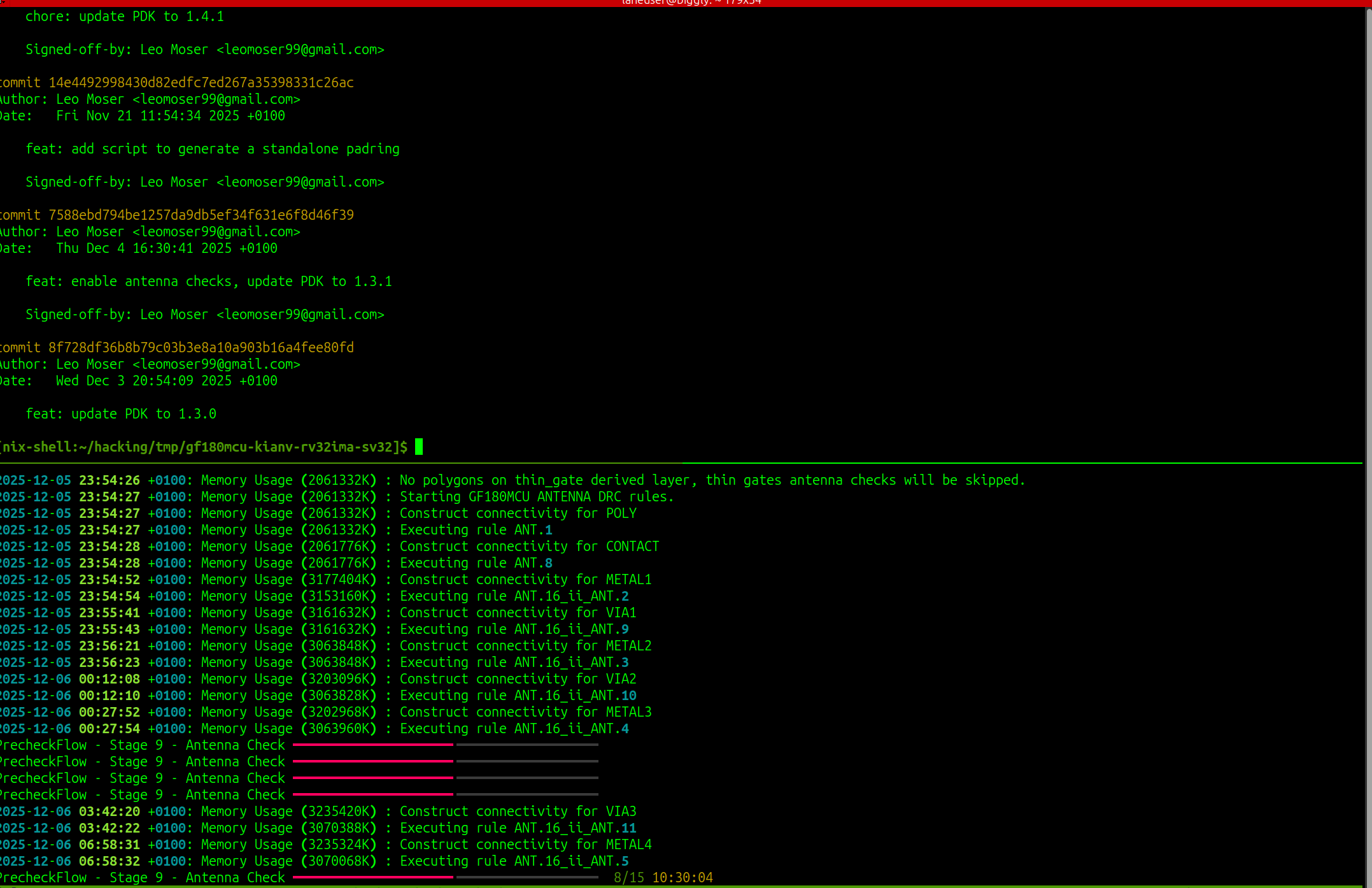 1 1 1 1 Update Time!
The PDK has been updated with changes to the KLayout antenna script.
1 1 1 1 Update Time!
The PDK has been updated with changes to the KLayout antenna script.
 Update Time!
The PDK has been updated with changes to the KLayout antenna script.
Update Time!
The PDK has been updated with changes to the KLayout antenna script.
 1 @everyone Important Update!
This update introduces a reworked filler generation that complies with several rules that the foundry did not allow us to waive. This may result in your design not meeting the necessary metal density requirements. Therefore, an option has been added to the filler generation script which enables the dummy fill shapes to be moved to the active metal layer, in order to allow some of these very restrictive rules to be ignored.
This option is enabled by default for the Metal2 layer in the project template, as this layer is most likely to be under the minimum density limit for digital designs.
Additionally, the antenna script has been updated to correctly verify the antenna rules according to the PDK docs. Previously, the check did not take the diode area into account correctly. Thanks to @tnt for identifying the issue and to @Egor Lukyanchenko for providing an updated KLayout implementation.
Furthermore, another issue was discovered in the antenna script.
Similar to the DRC deck, the comp layer needs to be cut by the poly gate to prevent shorts in the extracted netlist. This was less obvious than in the DRC deck, since the antenna check starts with the lower layers and progresses to the upper layers. It is expected for the check to get progressively slower - but not to this extent!
The antenna check should now finish in reasonable time, even for very complex designs.
(Previously, one design with a lot of combinatorial logic timed out on the online platform. Now the antenna check for this design completes in 13.7 minutes on my machine.) 5 1
1 @everyone Important Update!
This update introduces a reworked filler generation that complies with several rules that the foundry did not allow us to waive. This may result in your design not meeting the necessary metal density requirements. Therefore, an option has been added to the filler generation script which enables the dummy fill shapes to be moved to the active metal layer, in order to allow some of these very restrictive rules to be ignored.
This option is enabled by default for the Metal2 layer in the project template, as this layer is most likely to be under the minimum density limit for digital designs.
Additionally, the antenna script has been updated to correctly verify the antenna rules according to the PDK docs. Previously, the check did not take the diode area into account correctly. Thanks to @tnt for identifying the issue and to @Egor Lukyanchenko for providing an updated KLayout implementation.
Furthermore, another issue was discovered in the antenna script.
Similar to the DRC deck, the comp layer needs to be cut by the poly gate to prevent shorts in the extracted netlist. This was less obvious than in the DRC deck, since the antenna check starts with the lower layers and progresses to the upper layers. It is expected for the check to get progressively slower - but not to this extent!
The antenna check should now finish in reasonable time, even for very complex designs.
(Previously, one design with a lot of combinatorial logic timed out on the online platform. Now the antenna check for this design completes in 13.7 minutes on my machine.) 5 1ANTENNADIFFSIDEAREARATIO. 1
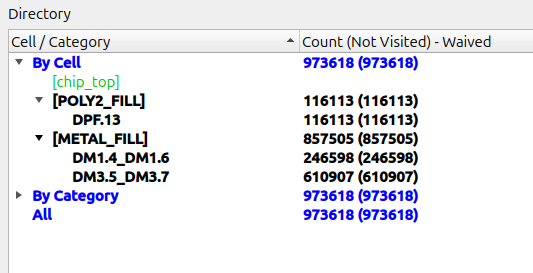
Metal2_active or accidentally left in COMP_fill_cell / Poly2_fill_cell... but no, that merged cleanly @everyone Important Update!
This update introduces a reworked filler generation that complies with several rules that the foundry did not allow us to waive. This may result in your design not meeting the necessary metal density requirements. Therefore, an option has been added to the filler generation script which enables the dummy fill shapes to be moved to the active metal layer, in order to allow some of these very restrictive rules to be ignored.
This option is enabled by default for the Metal2 layer in the project template, as this layer is most likely to be under the minimum density limit for digital designs.
Additionally, the antenna script has been updated to correctly verify the antenna rules according to the PDK docs. Previously, the check did not take the diode area into account correctly. Thanks to @tnt for identifying the issue and to @Egor Lukyanchenko for providing an updated KLayout implementation.
Furthermore, another issue was discovered in the antenna script.
Similar to the DRC deck, the comp layer needs to be cut by the poly gate to prevent shorts in the extracted netlist. This was less obvious than in the DRC deck, since the antenna check starts with the lower layers and progresses to the upper layers. It is expected for the check to get progressively slower - but not to this extent!
The antenna check should now finish in reasonable time, even for very complex designs.
(Previously, one design with a lot of combinatorial logic timed out on the online platform. Now the antenna check for this design completes in 13.7 minutes on my machine.)  2 1
2 1-rd Metaln_active to the script, where n is the number of the metal layer. This moves the fill shapes to the active metal layer and thus ignores some of the dummy fill rules. 1filler to drawing and then run the full precheck on that. 1 1Metal2.drawing between the bond pads.start_changes() and end_changes() I can add the top-level filler cells before generating the actual fill. This allows each fill layer to consider the previous one. However, it does not allow to consider the subsequent layer, i.e. if you generate dummy metal on Metal2, you would need to consider this when placing active Metal3. Therefore, fill would need to be done in two passes: first generate the active metal fill for some layers, then generate the dummy metal fill for the other layers. But yeah, it would prevent fill on the layers above and below the active fill, so not a solution anyways... 1Metaln_ignore_active. 3 1
1
Metaln_ignore_active. 1 I guess at 5V the IR drop isn't all that big a deal but still, not sure if IR Drop stuff is properly setup in the default template. I guess at 5V the IR drop isn't all that big a deal but still, not sure if IR Drop stuff is properly setup in the default template. 1

Required PDK variable 'DPL_CELL_PADDING' did not get a specified value. This PDK may be incompatible with your flow while trying to run the make librelane-openroad (launching openroad). I'm not sure if it's something I did, and I'm looking around, but I did just update the PDK. Does anyone else have this issue on the latest pdk update? 2 1
2 1
 1
1-rd Metal2_ignore_active-rd Metal2_ignore_active 1 1 ♂️♂️ 1 1 1 3 1 2♂️
 u_sram in my pdn.tcl 1u_chip_core.gen_proc_wrapper[<instance_number>].u_proc_wrapper.u_sram blocks[ ], but escaping them stopped them matching anything  2 1 One More Update!
No worries - if your design passed precheck before, it will pass precheck now, too.
This update makes magic DRC optional: magic DRC violations won't block the submission process.
This decision was made due to a number of false positive errors that can show up if you read in a layout in magic that was not generated by magic.
However, please note that you should still closely verify all magic DRC violations. If you have any doubts, or magic catches a DRC violation that KLayout does not, please let us know.
The other change is that the antenna check will also consider nwell-to-pcomp diodes. Previously, it only considered pcomp-to-nwell and nplus-to-substrate diodes.
These structures are found inside the foundry-provided I/O cells, so this change should help reduce antenna violations in some cases.
PS: Another reminder to submit your designs @ https://platform.wafer.space/ by 17th Dec @ 11:59pm AoE❗
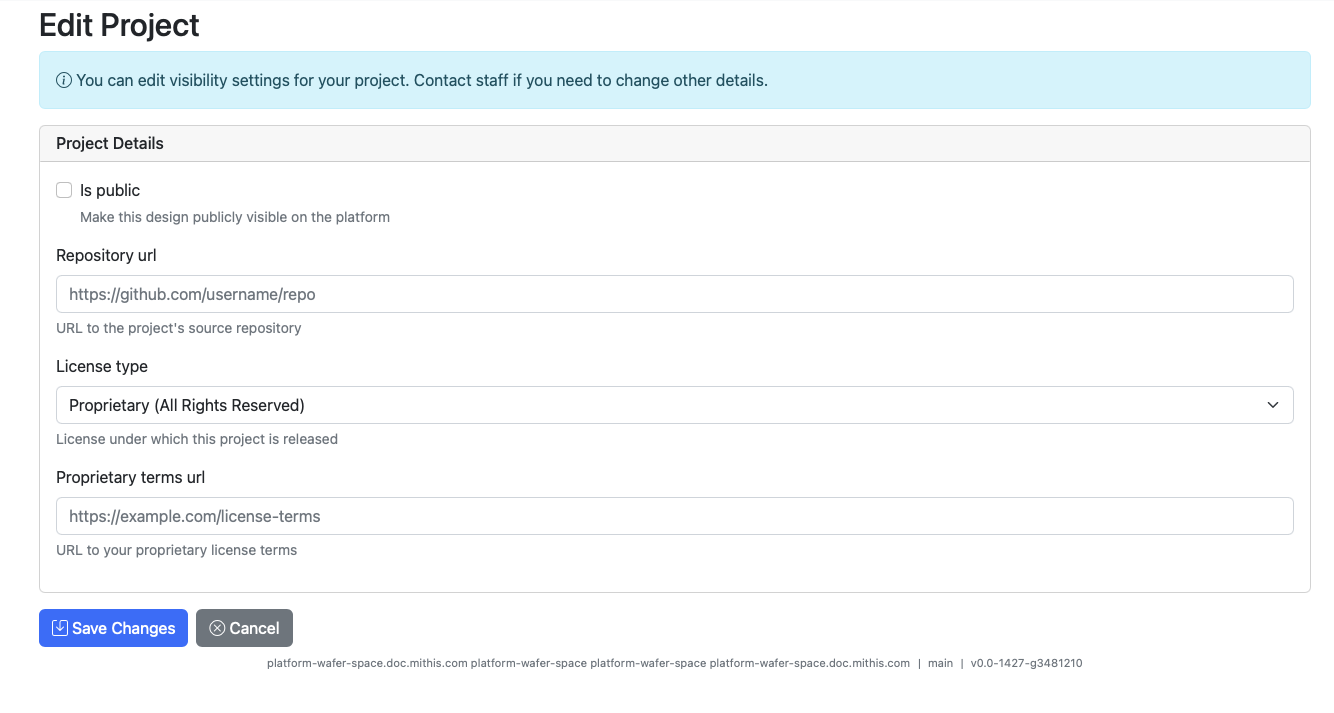
And please make sure to update your project description, visibility, license, and URL. 1 1 One More Update!
No worries - if your design passed precheck before, it will pass precheck now, too.
This update makes magic DRC optional: magic DRC violations won't block the submission process.
This decision was made due to a number of false positive errors that can show up if you read in a layout in magic that was not generated by magic.
However, please note that you should still closely verify all magic DRC violations. If you have any doubts, or magic catches a DRC violation that KLayout does not, please let us know.
The other change is that the antenna check will also consider nwell-to-pcomp diodes. Previously, it only considered pcomp-to-nwell and nplus-to-substrate diodes.
These structures are found inside the foundry-provided I/O cells, so this change should help reduce antenna violations in some cases.
PS: Another reminder to submit your designs @ https://platform.wafer.space/ by 17th Dec @ 11:59pm AoE❗
And please make sure to update your project description, visibility, license, and URL.
2 1 One More Update!
No worries - if your design passed precheck before, it will pass precheck now, too.
This update makes magic DRC optional: magic DRC violations won't block the submission process.
This decision was made due to a number of false positive errors that can show up if you read in a layout in magic that was not generated by magic.
However, please note that you should still closely verify all magic DRC violations. If you have any doubts, or magic catches a DRC violation that KLayout does not, please let us know.
The other change is that the antenna check will also consider nwell-to-pcomp diodes. Previously, it only considered pcomp-to-nwell and nplus-to-substrate diodes.
These structures are found inside the foundry-provided I/O cells, so this change should help reduce antenna violations in some cases.
PS: Another reminder to submit your designs @ https://platform.wafer.space/ by 17th Dec @ 11:59pm AoE❗
And please make sure to update your project description, visibility, license, and URL. 1 1 One More Update!
No worries - if your design passed precheck before, it will pass precheck now, too.
This update makes magic DRC optional: magic DRC violations won't block the submission process.
This decision was made due to a number of false positive errors that can show up if you read in a layout in magic that was not generated by magic.
However, please note that you should still closely verify all magic DRC violations. If you have any doubts, or magic catches a DRC violation that KLayout does not, please let us know.
The other change is that the antenna check will also consider nwell-to-pcomp diodes. Previously, it only considered pcomp-to-nwell and nplus-to-substrate diodes.
These structures are found inside the foundry-provided I/O cells, so this change should help reduce antenna violations in some cases.
PS: Another reminder to submit your designs @ https://platform.wafer.space/ by 17th Dec @ 11:59pm AoE❗
And please make sure to update your project description, visibility, license, and URL. 
 1
1 This tapeout has 13 different projects on it, coming from our students or from our research departments.
Some of our highlights are the game Tetris and a RISC-V CPU for our TinyWhisper project. And of course, our students are excited to tape their first chip.
The starting template has also been extended with some more Makefile targets to also build specific macros, copy important reports
This tapeout has 13 different projects on it, coming from our students or from our research departments.
Some of our highlights are the game Tetris and a RISC-V CPU for our TinyWhisper project. And of course, our students are excited to tape their first chip.
The starting template has also been extended with some more Makefile targets to also build specific macros, copy important reports copy-reports, and copy & ZIP the GDS for submission copy-gds. There is also a Makefile target build-all, which enables everyone to simply clone the repo, install the nix-shell, execute make build-all in it, and the whole chip will be built submission-ready. Maybe this is useful for someone for future runs. Feel free to use it.
A big shoutout to @Leo Moser (mole99), who supported us during this journey. Another thanks to @Tholin and his project (https://github.com/AvalonSemiconductors/ws-submission-2025/), which served as a reference for using macros. Thanks @Tim 'mithro' Ansell and everyone else involved, for making this possible.
GitHub Repo: https://github.com/iic-jku/gf180mcu-jku-projects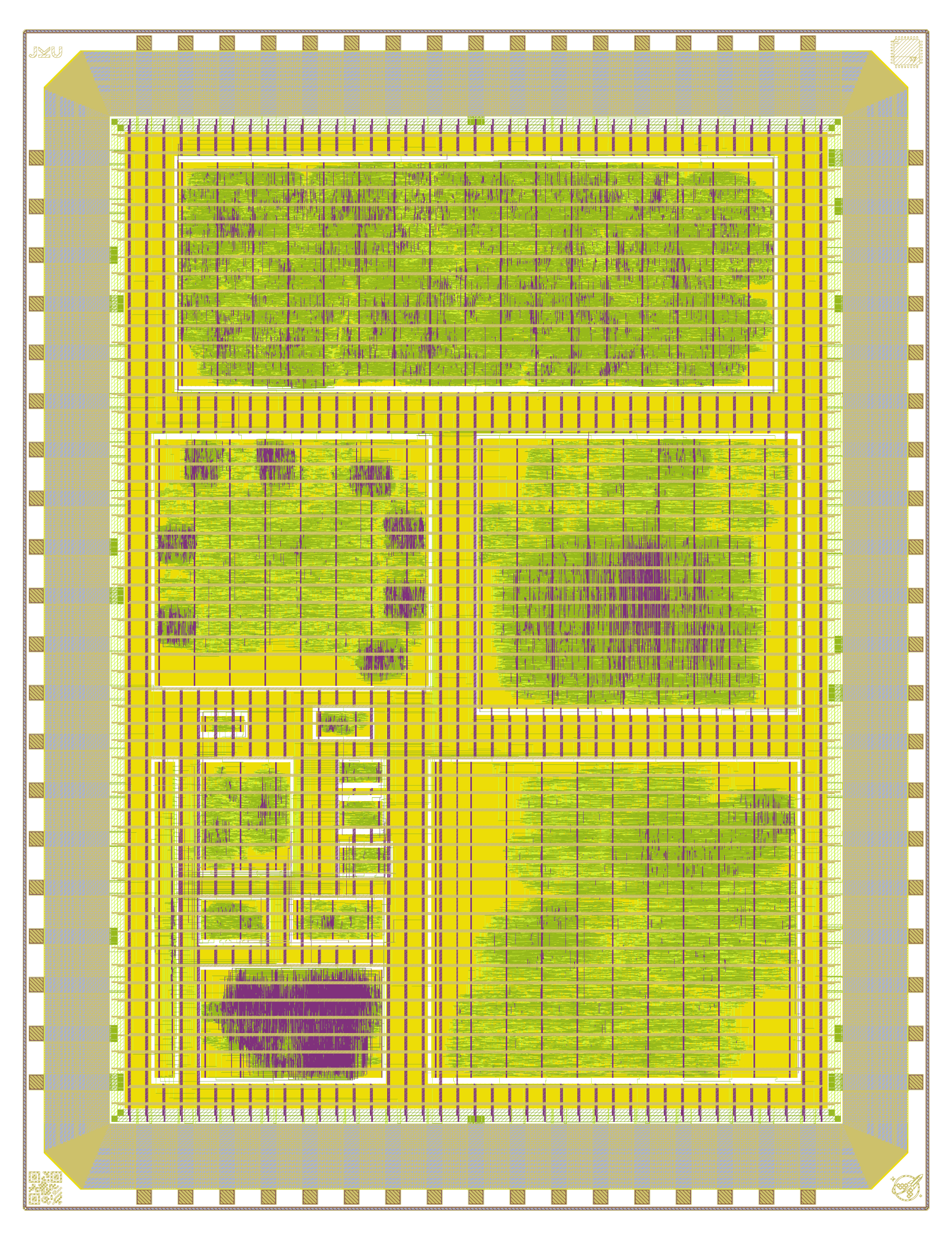 7 1
7 1 1 8 5 4 Minor Update!
This update fixes a regression introduced in the previous update (sorry!).
If your precheck was clean with PDK version 1.6.4, it will be clean with the latest version as well.
3
1 8 5 4 Minor Update!
This update fixes a regression introduced in the previous update (sorry!).
If your precheck was clean with PDK version 1.6.4, it will be clean with the latest version as well.
3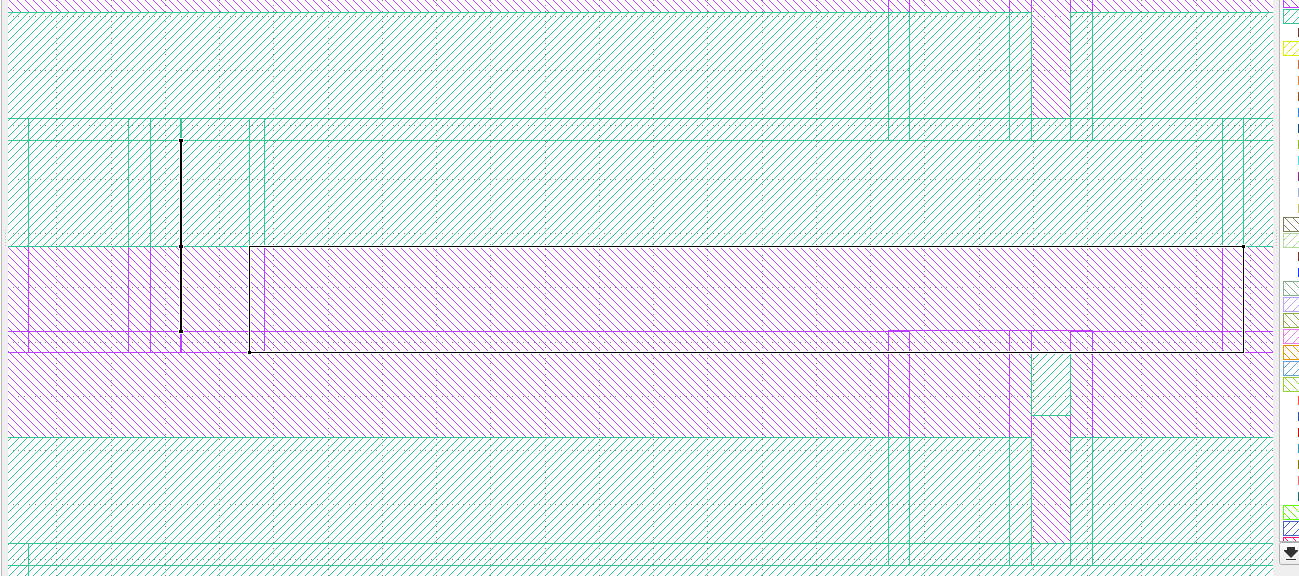 2 1
2 1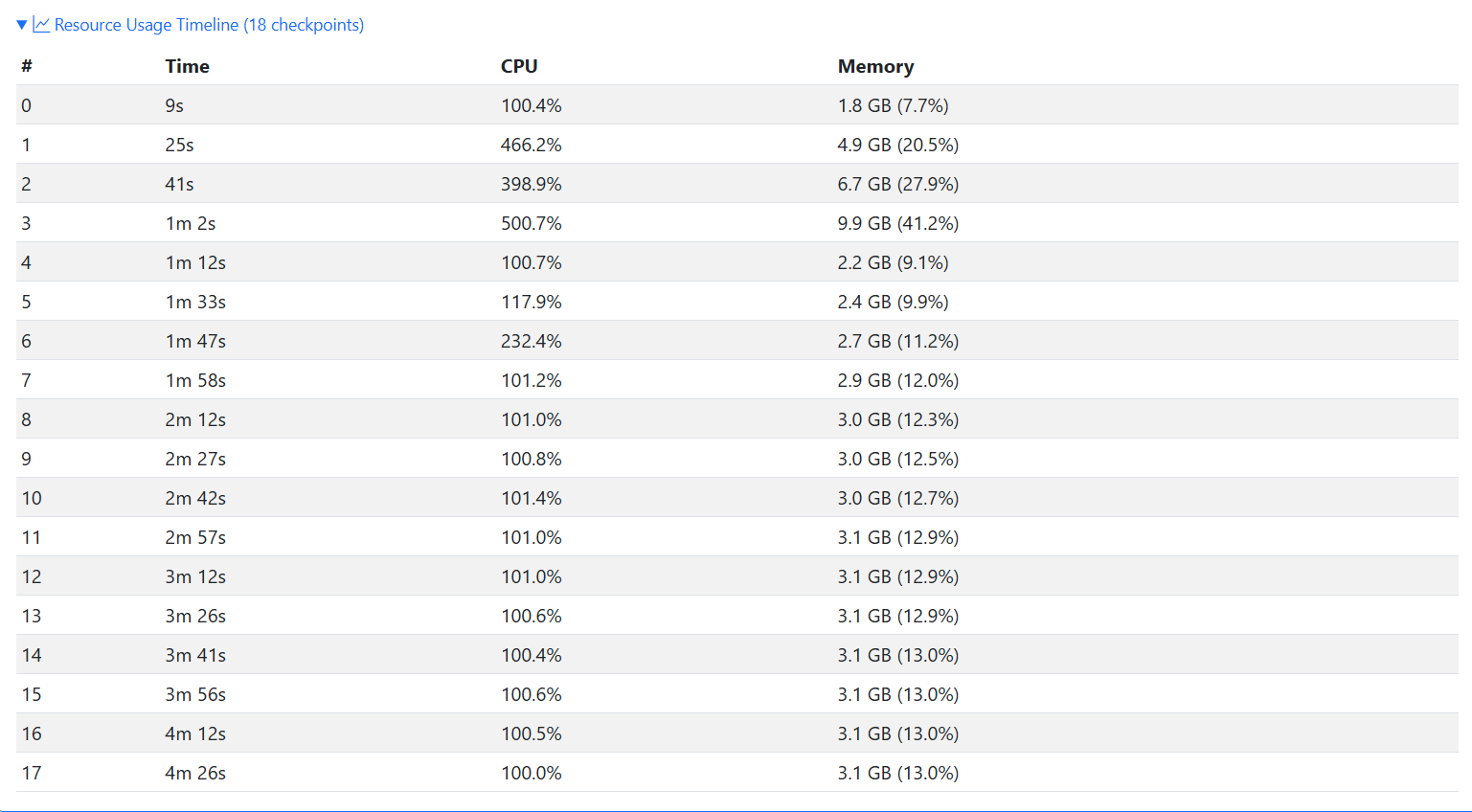
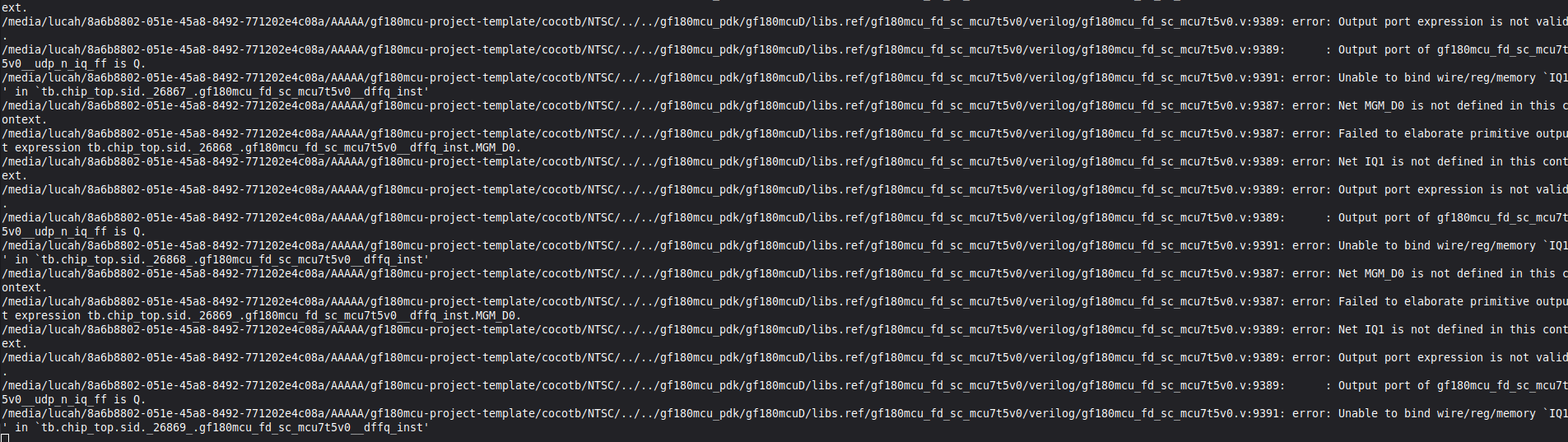
default_nettype none at the start of all your files and default_nettype wire` at the end. (edited) 4 2 2 1 1 1
1 1 1
1gf180mcu/flows/chip.py I see a list of steps that are executed for the whole flow. Then in gf180mcu/steps/* all the actual step processing logic and config/parameters lives, correct?
So when you add a OpenROAD.Floorplan step to chip.py, the corresponding logic is defined in the Floorplan(OpenROADStep) class residing in steps/openroad.py Is that the gist of how it works?
context: was investigating adding an optional rtl_macro_placer step to the flow (ala https://github.com/librelane/librelane/issues/537). Placing macros by hand was super tedious for me, and probably terrible layout performance gf180mcu/flows/chip.py I see a list of steps that are executed for the whole flow. Then in gf180mcu/steps/* all the actual step processing logic and config/parameters lives, correct?
So when you add a OpenROAD.Floorplan step to chip.py, the corresponding logic is defined in the Floorplan(OpenROADStep) class residing in steps/openroad.py Is that the gist of how it works?
context: was investigating adding an optional rtl_macro_placer step to the flow (ala https://github.com/librelane/librelane/issues/537). Placing macros by hand was super tedious for me, and probably terrible layout performance rmp stepfrom decimal import Decimal
import os
from typing import Literal, Optional, Tuple
from librelane.steps.openroad import Step, TclStep, OpenROADStep, CompositeStep, State, Variable, ViewsUpdate, MetricsUpdate, dpl_variables
from librelane.common import get_script_dir, process_list_file
@Step.factory.register()
class RMP(OpenROADStep):
id = "OpenROAD.RMP"
name = "Restructure RMP"
version = "0.1.0"
config_vars = OpenROADStep.config_vars + dpl_variables + [
Variable(
"RMP_CORNER",
Optional[str],
description="IPVT corner to use during restructure. If unspecified, the value for `DEFAULT_CORNER` from the PDK will be used.",
default="max_ss_125C_4v50"
),
Variable(
"RMP_TARGET",
Literal["timing", "area"],
description="In area mode, the focus is area reduction, and timing may degrade. In delay mode, delay is likely reduced, but the area may increase",
default="area",
),
Variable(
"RMP_SLACK_THRESHOLD",
Optional[Decimal],
description="Specifies a (setup) timing slack value below which timing paths need to be analyzed for restructuring",
default=Decimal()
),
Variable(
"RMP_DEPTH_THRESHOLD",
Optional[int],
description="Specifies the path depth above which a timing path would be considered for restructuring",
),
]
def get_script_path(self):
return "~/gf180mcu-chess/restructure.tcl"
def run(self, state_in: State, **kwargs) -> Tuple[ViewsUpdate, MetricsUpdate]:
self.config = self.config.copy(DEFAULT_CORNER=self.config["RMP_CORNER"])
kwargs, env = self.extract_env(kwargs)
lib_list = self.toolbox.filter_views(
self.config, self.config["LIB"], timing_corner=self.config.get("RMP_CORNER")
)
excluded_cells: Set[str] = set(self.config["EXTRA_EXCLUDED_CELLS"] or [])
excluded_cells.update(
process_list_file(self.config["SYNTH_EXCLUDED_CELL_FILE"])
)
excluded_cells.update(process_list_file(self.config["PNR_EXCLUDED_CELL_FILE"]))
trimmed_lib = self.toolbox.remove_cells_from_lib(
frozenset([str(lib) for lib in lib_list]),
excluded_cells=frozenset(excluded_cells),
)
env["_RMP_LIB"] = TclStep.value_to_tcl(trimmed_lib)
env["_RMP_ABC_LOG"] = TclStep.value_to_tcl(
os.path.join(self.step_dir, "abc.log")
)
env["RMP_CORNER"] = TclStep.value_to_tcl(self.config.get("RMP_CORNER"))
return super().run(state_in, env=env, **kwargs)
@Step.factory.register()
class RMPPlus(CompositeStep):
id = "OpenROAD.RMPPlus"
Steps = [
RMP,
Step.factory.get("OpenROAD.GlobalPlacement"),
Step.factory.get("OpenROAD.DetailedPlacement"),
Step.factory.get("OpenROAD.GlobalRouting"),
]PYTHONPATH, and which has a filename which begins with librelane_plugin_librelane_plugin_rmp.py) (edited)librelane/config.yaml under substituting_steps.substituting_steps section was for (makes sense in retrospect). awesome, thank you!rmp you would have nulled out the GlobalPlacement, DetailedPlacement and GlobalRouting , then inserted your RMP to run (and which includes the others)?rmp you would have nulled out the GlobalPlacement, DetailedPlacement and GlobalRouting , then inserted your RMP to run (and which includes the others)? OpenROAD.RMPPlus afterwards to try to use the information
And even moreso for how parameters interact. optimizing was a lot of tweaking and seeing how it adjusted things ) 1 1 1dffrnq (flop with async reset) are all drive=1. (edited) 1
1